How to Tell If a Rolex Is Real (and How to Sell It)
Reviewed by Jonatan Yakubov, Graduate Gemologist at DJP Jewelers & Luxury Buyers .
Updated July 2026.
A Rolex can look convincing, carry a plausible serial number, and arrive with a box and papers—and still require professional verification.
The most useful question is not whether one exterior detail looks correct. It is whether the case, dial, hands, bezel, bracelet, movement, markings, documentation, and production period are all consistent with the exact reference being examined.
Quick Answer: How Can You Tell If a Rolex Is Real?
No single visual test can prove that a Rolex is authentic. Details such as the dial printing, seconds-hand movement, date display, crystal, case finishing, serial and reference markings, bracelet, clasp, and case back may reveal inconsistencies, but sophisticated counterfeits can reproduce many exterior features convincingly.
A meaningful examination requires identification of the exact model and reference, comparison with the correct production period, inspection of the watch’s construction and components, and—in many cases—professional examination of the movement.
The central rule: authenticity is determined by consistency across the complete watch, not by one logo, serial number, magnifier, weight test, or seconds-hand movement.
Official versus independent verification: Rolex states that official confirmation of authenticity is provided through its Official Rolex network and Rolex Certified Pre-Owned program. DJP Jewelers & Luxury Buyers provides an independent inspection and resale evaluation; it does not issue official Rolex certification.
Rolex Warning Signs You Can Inspect Safely
The following checks may help you notice a mismatch or reason for concern. They should be treated as screening observations—not final authentication tests.
Seconds-Hand Movement
Most modern Rolex watches use mechanical movements, so the seconds hand advances in rapid steps that can appear smooth rather than jumping once per second.
However, movement alone cannot authenticate the watch. Counterfeit mechanical movements can imitate a sweep, an authentic watch may run poorly when damaged or overdue for service, and Rolex produced historical quartz watches including the Oysterquartz.
Dial Printing and Alignment
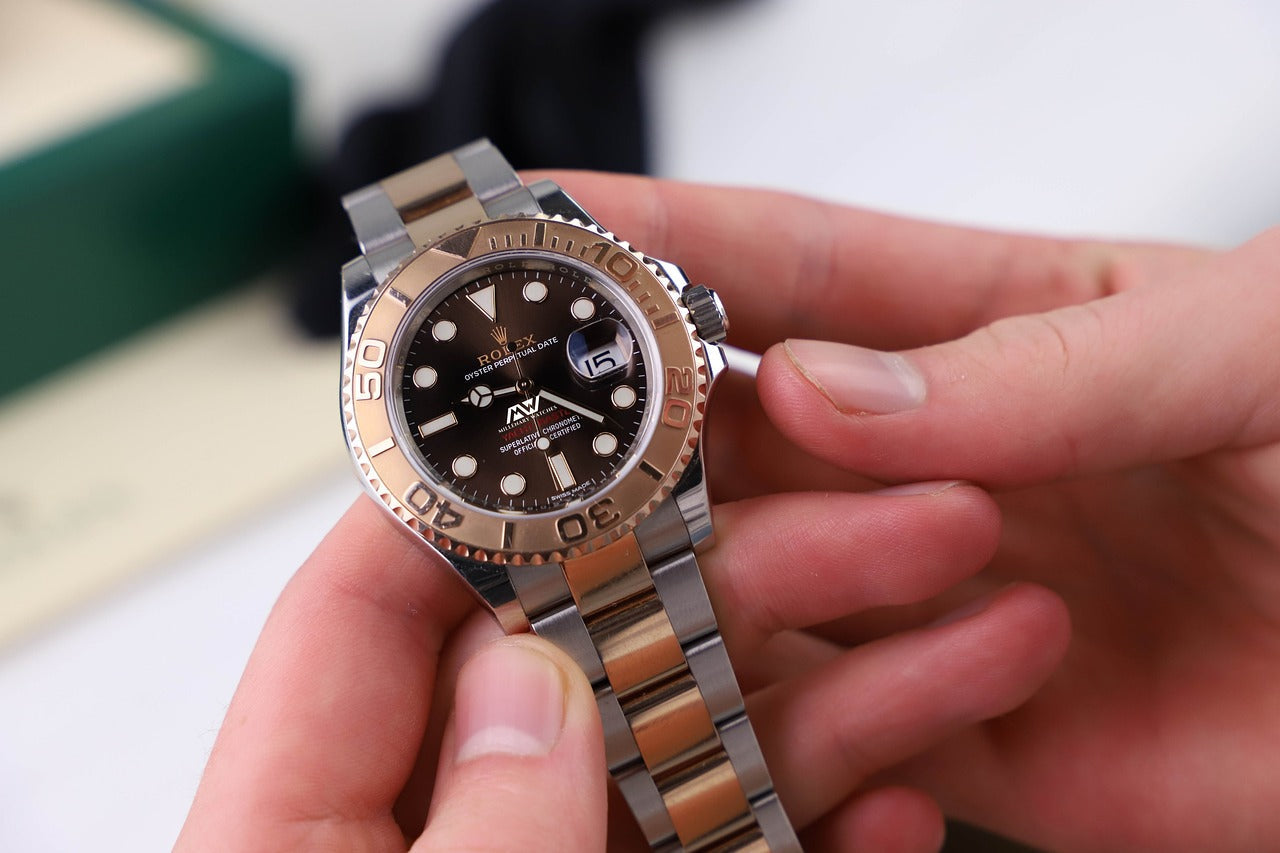
Examine the brand name, model text, minute track, hour markers, date window, hands, and spacing under magnification.
Uneven printing, incorrect fonts, misaligned markers, excess adhesive, poorly finished hands, or inconsistent luminous material can justify further inspection. Aging, moisture, restoration, and service replacement parts must also be considered.
Cyclops Lens and Date Display
On references equipped with a Cyclops lens, examine its position, clarity, date alignment, font, and apparent magnification.
Weak magnification or poor alignment may be a warning sign, but not every Rolex has a date display, and the Cyclops alone cannot prove authenticity.
Case Shape and Finishing
Compare the case dimensions, lug shape, polished and brushed surfaces, crown guards, bezel, and transitions between finishes with the specifications of the exact reference.
Soft edges may result from repeated polishing rather than counterfeiting. The important question is whether the shape, finish, material, and construction are consistent with the model and its condition.
Reference, Serial, and Case Markings
Inspect the placement, depth, spacing, and consistency of identifying marks. Their location and appearance can vary by model and production period.
A convincing or valid-looking number does not authenticate the watch. Counterfeiters may copy numbers, and the markings must correspond with the physical reference, dial, bracelet, movement, and documentation.
Bracelet, Clasp, and End Links
Examine the bracelet construction, link shape, clasp operation, engravings, reference marks, end-link fit, finishing, and number of links.
A genuine watch can have a later replacement bracelet, while a counterfeit watch can carry convincing clasp markings. The bracelet must be evaluated as one component of the complete watch.
Laser-Etched Crown on the Crystal
Many modern Rolex crystals include a very small crown marking near the 6 o’clock position.
Its presence, absence, or appearance must be considered in relation to the reference, production period, and possibility of a replacement crystal. Counterfeit crystals may also reproduce this detail.
Case Back
Compare the material, construction, engraving, shape, and finish with the exact reference. Many Rolex watches use solid screw-down case backs, but that is not a universal rule.
Genuine current exceptions include the Perpetual 1908 and Land-Dweller, which use transparent sapphire case backs. A transparent or engraved back is therefore not automatically evidence of a counterfeit.
Common Rolex Authentication Myths
Myth: A Smooth Seconds Hand Proves It Is Real
False. Counterfeit mechanical movements can produce a convincing sweep, and historical Rolex quartz references exist. The movement must match the exact watch.
Myth: A Heavy Watch Must Be Genuine
False. Weight depends on the reference, case size, material, bracelet, strap, number of links, and internal construction. Compare weight only with the correct specifications.
Myth: Box and Papers Prove Authenticity
False. Genuine packaging and documents can be separated from their original watch, paired with another watch, altered, or copied. They must correspond with the physical timepiece.
Myth: Every Real Rolex Has a Solid Case Back
False. Many references do, but genuine exceptions exist. The case back must be compared with the documented configuration of the exact reference.
Myth: A Matching Serial Number Is Enough
False. A number may be copied. Authentication requires consistency among the number, reference, production period, components, movement, and documentation.
Myth: A Watch Is Either Completely Real or Completely Fake
Not always. A watch may contain genuine, replaced, restored, aftermarket, or counterfeit components in the same assembly.
What Watch Specialists Inspect
A serious Rolex examination is a process of identification and comparison. The specialist first determines what the watch claims to be, then checks whether each major component is appropriate for that reference and production period.
1. Exact Model, Reference, and Configuration
The watch should be identified by its exact reference rather than by a broad family name such as “Submariner,” “Datejust,” or “Daytona.”
The case material, diameter, bezel, dial, bracelet or strap, clasp, movement, complications, and other features should be consistent with a configuration Rolex actually produced.
2. Case, Bezel, Crown, Crystal, and Finishing
The specialist examines proportions, metal, surface finishing, engraving, lug shape, crown operation, bezel construction, crystal, gasket areas, and evidence of polishing, corrosion, impact, or replacement.
The owner should not assume that an older watch remains water resistant. Pressure testing and appropriate service may be required before exposing it to water.
3. Dial, Hands, Luminous Material, and Date Components
The dial and hands are checked for correct printing, construction, color, finish, spacing, proportions, luminous material, date font, and consistency with the claimed age and reference.
Restoration, moisture damage, reluming, refinishing, service replacements, and aftermarket components can affect originality and collector value even when the underlying watch is genuine.
4. Bracelet, Clasp, End Links, and Accessories
The bracelet and clasp are inspected for the proper style, markings, construction, fit, condition, stretch, link count, and consistency with the case and production period.
A later genuine replacement bracelet may be functional and appropriate for wear while still affecting how collectors evaluate originality.
5. Movement and Internal Components
Exterior inspection cannot confirm every internal component. When appropriate and performed by a qualified professional, movement examination may reveal whether the calibre, architecture, finishing, bridges, rotor, screws, engravings, and other components correspond with the reference.
Do not open the case at home. Improper tools or handling can scratch the case, damage seals, introduce dust or moisture, and compromise water resistance.
6. Documents, Service Records, and Provenance
Guarantee cards, older punched papers, receipts, service documents, boxes, tags, booklets, and previous ownership records can support the watch’s history.
They do not replace physical inspection. Numbers, dates, retailer information, accessories, service history, and the watch itself must be consistent with one another.
7. Condition and Function
A specialist may also examine timekeeping, winding, crown operation, date change, chronograph or other complications, power reserve, bracelet condition, and signs that service may be required.
Poor operation does not automatically mean the watch is counterfeit. A genuine watch may be damaged, magnetized, improperly serviced, or overdue for maintenance.
Genuine, Original, Replaced, Aftermarket, and Mixed-Parts Watches
“Is it real?” is sometimes too simple a question. A watch may be fundamentally genuine while no longer remaining in its original configuration.
Original Watch
The major components remain consistent with the watch’s original production configuration, subject to normal age, wear, and verified service history.
Genuine Service Parts
Rolex or authorized service work may replace worn components with genuine later-production parts. The watch can remain genuine while becoming less original from a collector’s viewpoint.
Aftermarket Components
A genuine watch may contain a non-Rolex dial, bezel, crystal, bracelet, gemstones, or other replacement components. These modifications can affect service eligibility and resale value.
Mixed or Assembled Watch
A watch may combine genuine parts from different references or periods, or genuine components with counterfeit ones. Consistency across the complete watch is therefore essential.
A modified or serviced watch is not automatically worthless. Its value depends on which parts were changed, whether the original components remain available, the quality of the work, the rarity of the reference, and current buyer demand.
Do Box and Papers Prove a Rolex Is Real?
No. Original boxes, guarantee cards, receipts, booklets, tags, and service records can add context and may strengthen resale value when they belong to the watch being evaluated.
However, boxes and documents can be purchased separately, copied, altered, or paired with a different watch. The reference, serial information, dates, retailer records, accessories, and physical watch should support the same history.
Keep every accessory you have. Even though packaging and paperwork do not prove authenticity by themselves, a complete and consistent set can improve buyer confidence and marketability.
What Determines the Resale Value of a Rolex?
Once the watch has been independently evaluated, the amount a buyer may offer depends on more than whether it is genuine.
- Exact reference and configuration: specific case materials, dials, bezels, bracelets, and production variations can have different levels of demand.
- Originality: original-period components may matter significantly for vintage and collectible references.
- Condition: polishing, dents, corrosion, scratches, dial damage, bracelet stretch, moisture exposure, and worn components can affect value.
- Box, papers, and accessories: a complete and consistent set may improve marketability, although the watch can still have value without them.
- Service history: documented professional service may help explain condition and replaced components.
- Bracelet and link count: correct bracelets, clasps, end links, and a complete link set can matter.
- Dial and bezel variation: certain authentic configurations can attract stronger collector interest than others.
- Current market demand: secondary-market interest and pricing can change over time, even for well-known references.
Do not polish, refinish, open, modify, or replace components solely to prepare the watch for sale. Have the watch evaluated first. Unnecessary work may cost more than it adds and may reduce collector interest.
How to Sell a Rolex Safely
Gather the Watch and Everything That Belongs With It
Bring or photograph:
- The watch and full bracelet or strap
- Any removed or extra links
- Original guarantee card or papers
- Original box, tags, booklets, and accessories
- Purchase receipt, when available
- Service receipts and replaced components
- Any previous appraisal or insurance documentation
Do Not Open or Aggressively Clean It
Wipe the exterior gently with a soft, dry cloth if needed. Do not open the case, polish the bracelet, apply abrasive compounds, replace the crystal, or attempt movement work before an experienced professional examines the watch.
Confirm That You Have the Right to Sell It
Make sure ownership is clear. For an inherited watch, estate documents or other ownership records may be useful. For a secondhand purchase, retain the bill of sale, seller information, payment records, and communications.
Compare the Complete Transaction
When comparing buyers, consider the inspection process, explanation of the offer, payment terms, shipping or insurance requirements, commissions or deductions, return policy, and whether you remain free to decline.
How DJP Evaluates a Rolex for Resale
DJP Jewelers & Luxury Buyers independently evaluates Rolex and other luxury watches for potential purchase. This is a resale evaluation and is separate from official Rolex certification.
Bring or Submit the Watch
Visit a DJP Texas location with the watch and available accessories, or begin online through the DJP BuyBack Program with clear photographs and item details.
Receive an Independent Evaluation
DJP’s watch specialists examine the reference, configuration, visible components, condition, documentation, originality concerns, and current resale demand.
Review the Offer
When DJP is interested in purchasing the watch, we provide a current market-based offer. There is no obligation to accept it. Same-day payment options are available after an offer is accepted.
Learn more about DJP’s Rolex and luxury-watch buying service. For watch repair, maintenance, or restoration questions, visit our watch services page.
Rolex Buyers Across Texas
DJP Jewelers & Luxury Buyers provides independent luxury-watch resale evaluations at four established Texas locations.
Houston Rolex Buyers Near the Galleria
Serving Houston, the Galleria, Uptown, River Oaks, Memorial, Bellaire, and surrounding areas.
The Woodlands–Spring Rolex Buyers
Serving The Woodlands, Spring, Conroe, Shenandoah, Oak Ridge North, and nearby communities.
Sugar Land Rolex Buyers
Heritage Jewelry & Loan by DJP is part of DJP Jewelers & Luxury Buyers and serves Sugar Land, Missouri City, Stafford, Richmond, and surrounding areas.
Austin Rolex Buyers
Serving Austin, Round Rock, Cedar Park, Georgetown, Lakeway, Bee Cave, Westlake, and nearby Central Texas communities.
A Brief History of the Rolex Name
Rolex traces its beginning to London in 1905, when Hans Wilsdorf founded a business specializing in the distribution of timepieces.
In 1908, Wilsdorf devised and registered the name “Rolex.” According to Rolex’s official history, he wanted a name that was short, easy to pronounce in different languages, and suitable for a watch dial. Rolex established permanent operations in Geneva in 1919.
This history can help place an older watch in context, but the age of a watch or story attached to it does not prove authenticity. Historical claims must still be supported by the physical watch and credible documentation.
Frequently Asked Questions
Can I Authenticate a Rolex at Home?
You can inspect visible details and identify possible warning signs, but no home test can confirm every component. A convincing counterfeit may reproduce the dial, markings, bracelet, weight, Cyclops lens, and hand movement.
Does a Real Rolex Always Have a Smooth Seconds Hand?
No single hand movement proves authenticity. Most modern Rolex watches are mechanical, but Rolex also produced historical quartz references such as the Oysterquartz. Counterfeit mechanical movements can imitate a sweep.
Can a Genuine Rolex Have a Transparent Case Back?
Yes. Although many Rolex watches have solid case backs, genuine current models including the Perpetual 1908 and Land-Dweller use transparent sapphire case backs.
Do All Real Rolex Watches Have Serial Numbers?
Rolex watches generally carry identifying numbers or markings, but their location and format can vary by era and reference. A missing, altered, or unusually placed number requires further investigation, while a convincing number alone does not prove authenticity.
Does the Laser-Etched Crown Prove a Rolex Is Real?
No. Many modern crystals include the small crown marking, but its use varies by period and replacement history, and counterfeit crystals may reproduce it.
Can I Sell a Rolex Without the Box and Papers?
Yes. The watch can still be independently evaluated and may have substantial value. A consistent box, guarantee card, service history, and accessories may improve buyer confidence and resale demand.
Can a Genuine Rolex Contain Aftermarket Parts?
Yes. A genuine watch may have an aftermarket dial, bezel, crystal, bracelet, gemstones, or other modifications. These parts can affect originality, service options, collectibility, and value.
Should I Open the Case to Check the Movement?
No. Opening the case without proper tools and training can damage the watch, scratch the case, disturb seals, introduce contamination, and compromise water resistance.
Can a Watch With Replacement Parts Still Be Valuable?
Yes. The effect depends on whether the replacements are genuine service parts or aftermarket components, which parts were changed, whether the originals remain available, and the rarity and demand for the reference.
How Can I Check Whether a Rolex May Be Stolen?
Ask for proof of ownership, identification, original documents when available, and a written bill of sale. Professional buyers may review available lost-and-stolen-watch databases and follow applicable reporting procedures. No single database search can guarantee that a watch has never been reported elsewhere.
How Can I Find Out What My Rolex Is Worth?
A current estimate requires the exact reference, configuration, condition, originality, documentation, bracelet, accessories, service history, and current secondary-market demand. An in-person examination is more reliable than a generic online price range.
Does DJP Provide Official Rolex Certification?
No. DJP provides an independent watch evaluation for potential resale and purchase purposes. Official Rolex confirmation and Rolex Certified Pre-Owned certification are provided through Rolex’s official network.
Find Out What Your Rolex Is Worth
A logo, serial number, smooth hand movement, Cyclops lens, box, or guarantee card may provide information, but none can authenticate the complete watch by itself.
A credible evaluation considers whether the reference, case, dial, hands, bezel, crystal, bracelet, movement, documents, condition, and production period are consistent with one another.
Considering selling a Rolex?
Begin with an independent, no-obligation resale evaluation at DJP Jewelers & Luxury Buyers.
Explore Watch Buying Submit Your Rolex Online View Texas Locations
Editorial Sources
This educational article uses official Rolex sources for brand history, current model specifications, servicing information, and the distinction between independent evaluation and official Rolex authentication.
- Rolex: Authenticity, Official Jewelers, and Service FAQs
- Rolex Certified Pre-Owned Certification Process
- Rolex Official History: 1905–1919
- Rolex Watchmaking: Case and Transparent Case-Back Information
- Rolex Perpetual 1908: Transparent Case Back
- Rolex Land-Dweller: Official Model Information
- Rolex Watch Care and Service
DJP Jewelers & Luxury Buyers is an independent luxury-watch buyer and is not affiliated with, sponsored by, or endorsed by Rolex SA. Rolex, Oyster, Perpetual, Submariner, GMT-Master II, Datejust, Daytona, Day-Date, Land-Dweller, 1908, and other referenced names are trademarks of their respective owner.

Written by Jonatan Yakubov