Longines vs. Omega: Which Holds Its Value Better?
Reviewed by Jonatan Yakubov, Graduate Gemologist at DJP Jewelers & Luxury Buyers.
Longines vs. Omega: Which Holds Its Value Better?
Both are storied Swiss watchmakers with serious horological credentials, and both show up often in estate collections and secondhand sales. But when it comes to resale, they do not perform the same way. Here is how they actually compare.
Two of Switzerland's Oldest Watchmakers
Longines, founded in 1832 in Saint-Imier, holds a distinction verified by the World Intellectual Property Organization as the owner of the oldest registered trademark still in use unchanged — its winged hourglass logo, registered in 1889. Omega, founded in 1848, built its reputation on precision timekeeping and became NASA's choice for the Speedmaster, the first watch worn on the moon in 1969. Both brands are now part of the Swatch Group, though they occupy different tiers of the same portfolio.
Positioning and Price Point
Longines sits in the accessible luxury tier, generally priced lower than Omega for comparable style and craftsmanship. Omega positions itself higher, with stronger name recognition and a deeper connection to prestige events like the Olympics, where it has served as official timekeeper since 1932.
Notable Collections
- Longines Heritage Collection. Vintage-inspired reissues combining classic aesthetics with modern watchmaking.
- Longines Master Collection. Multiple complications like chronographs, power reserve indicators, and moon phase displays.
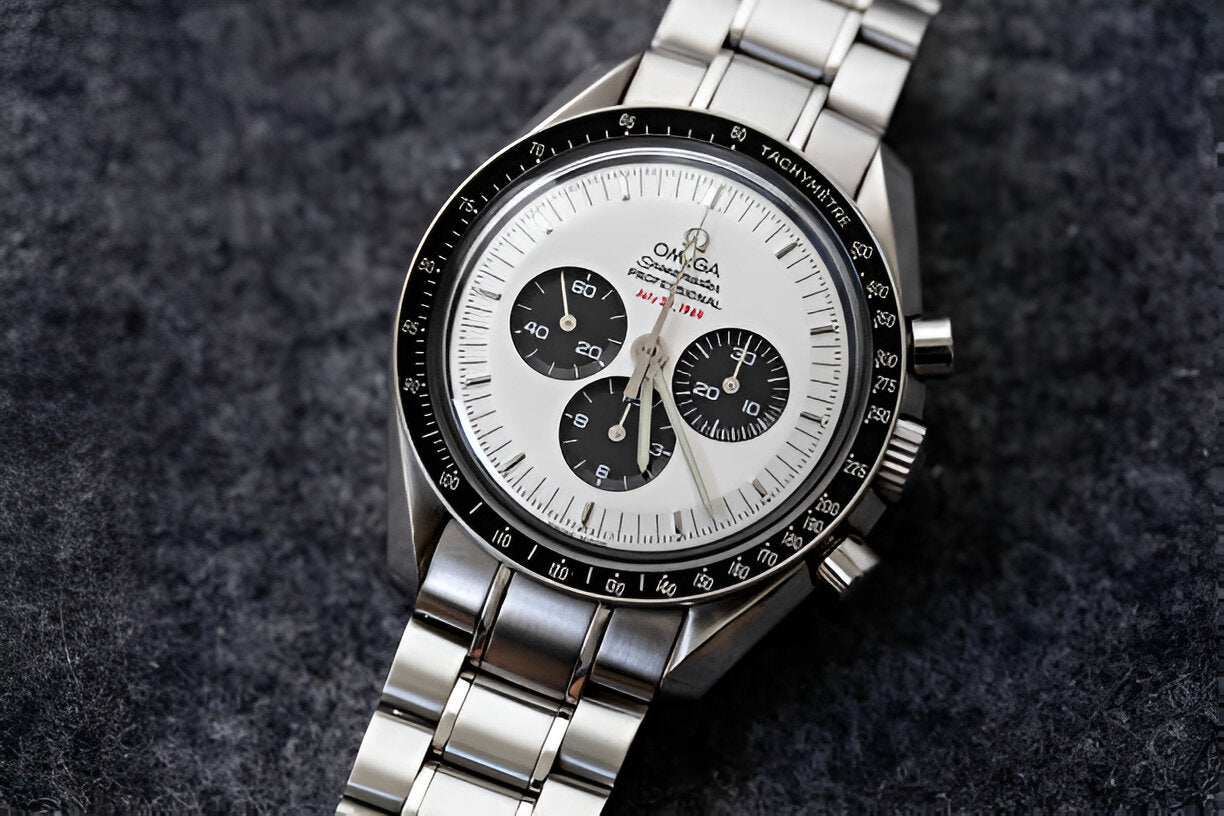
- Omega Speedmaster. Introduced in 1957 and famous as the first watch worn on the moon.
- Omega Seamaster. Launched in 1948 and widely recognized from its recurring role in James Bond films.
- Omega Constellation. Introduced in 1952, known for its star-set dial and distinctive half-moon case back.
What Determines Resale Value for Either Brand
- Model and reference number. Iconic references, like Omega's Speedmaster and Seamaster or Longines' heritage reissues, hold value better than lesser-known models.
- Movement type. In-house movements generally command more than models built on shared ETA-based movements, which some Longines models use.
- Condition and originality. Original dials, hands, and unpolished cases matter more with each passing year as collectors prioritize originality.
- Box, papers, and service history. Full documentation adds meaningfully to both brands' resale value.
Which Holds Value Better
In our experience, Omega generally retains value better on the secondary market. Its stronger brand recognition, larger collector base, and iconic models create steadier demand. Longines pieces are still solid sellers, and select vintage or heritage models can perform surprisingly well, but the overall resale ceiling tends to be lower than Omega's.
Get Both Evaluated
Whether you own a Longines, an Omega, or both, our specialists can tell you exactly what your watch is worth today. Visit our watch services page or bring your watch to any of our four Texas locations for a free evaluation.
Frequently Asked Questions
Which brand has better resale value, Longines or Omega?
Omega generally holds value better thanks to stronger brand recognition and a larger collector base, though select Longines heritage and vintage models can perform well too.
Are Longines watches considered luxury?
Yes, Longines is a genuine Swiss luxury brand, positioned in the accessible-luxury tier — a step below Omega in price and prestige but still well above mainstream watch brands.
Does the movement type affect what I can sell my watch for?
Yes. In-house movements typically command a premium over shared ETA-based movements, which some Longines models use, since collectors value manufacture-specific engineering.
Do I need the original box and papers to sell my watch?
No, but having them helps. Full documentation and service history add meaningfully to the offer on both Longines and Omega pieces.
Ready to find out what your Longines or Omega is worth? Schedule a free evaluation at any of our four Texas showrooms.

Written by Jonatan Yakubov