Engagement Ring Trends: What Couples Are Choosing Today
Reviewed by Jonatan Yakubov, Graduate Gemologist at DJP Jewelers & Luxury Buyers.
Engagement Ring Trends: What Couples Are Choosing Today
Every year brings a fresh wave of engagement ring styles, but the truth is that most "trends" are really just old ideas coming back around. If you are shopping, redesigning an heirloom, or just curious what today's rings look like, this guide walks through the shapes and styles currently popular, plus the one factor that matters more than any trend: lasting value.
A Habit That Is Older Than You Think
The first diamond engagement ring on record was not a modern invention. In 1477, Archduke Maximilian of Austria commissioned a diamond ring to propose to Mary of Burgundy, setting off a fashion among European nobility that eventually trickled down to everyone else. For most of that history, though, a diamond ring was reserved for the wealthy. It was a 1930s advertising campaign, not a royal court, that turned the diamond engagement ring into a near-universal expectation. Trends come and go, but the ring itself has been the anchor of the proposal for over 500 years.
Where the Trends Are Right Now
A few styles keep showing up in the settings we appraise and the pieces clients bring in to redesign:
- Elongated center stones. Oval, emerald, and radiant cuts continue to outsell the classic round for engagement rings, largely because they read larger per carat and elongate the finger.
- Colored gemstones as the center stone. Sapphires, in particular, have never fully gone out of fashion since a certain British royal engagement in 1981, and we are seeing more center-stone sapphires, morganites, and even emeralds paired with diamond halos.
- Three-stone and Toi et Moi rings. Trilogy rings pair a center stone with fancy-shaped side stones, while Toi et Moi, French for "you and me," features two distinct center stones side by side, a 19th-century design that is back in demand.
- Mixed metals. Two-tone bands, and rings that pair yellow gold with platinum prongs, are replacing the all-one-metal rule that dominated for decades.
- Chunky, thicker bands. Thin pave bands have given ground to bolder, heavier gold bands paired with a single statement stone.
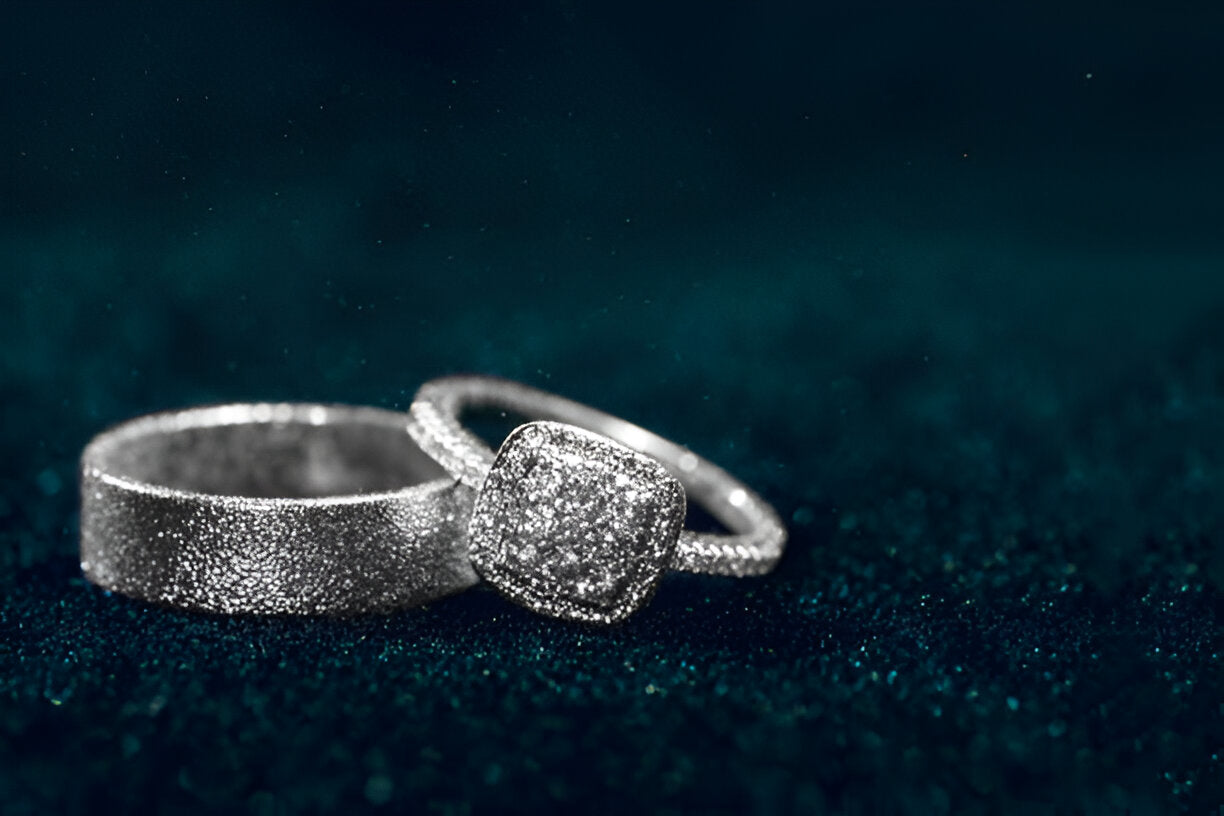
- Hidden halos and cathedral settings. A discreet ring of pave diamonds tucked beneath the center stone adds sparkle without changing the ring's profile from the top down.
- Bezel settings. A metal rim wrapping fully around the stone gives a minimalist, low-profile look that also protects the stone for everyday wear.
- Vintage and Art Deco-inspired detailing. Milgrain edges, filigree, baguette side stones in channel settings, and geometric details are back, often on rings built from repurposed heirloom metal and stones.
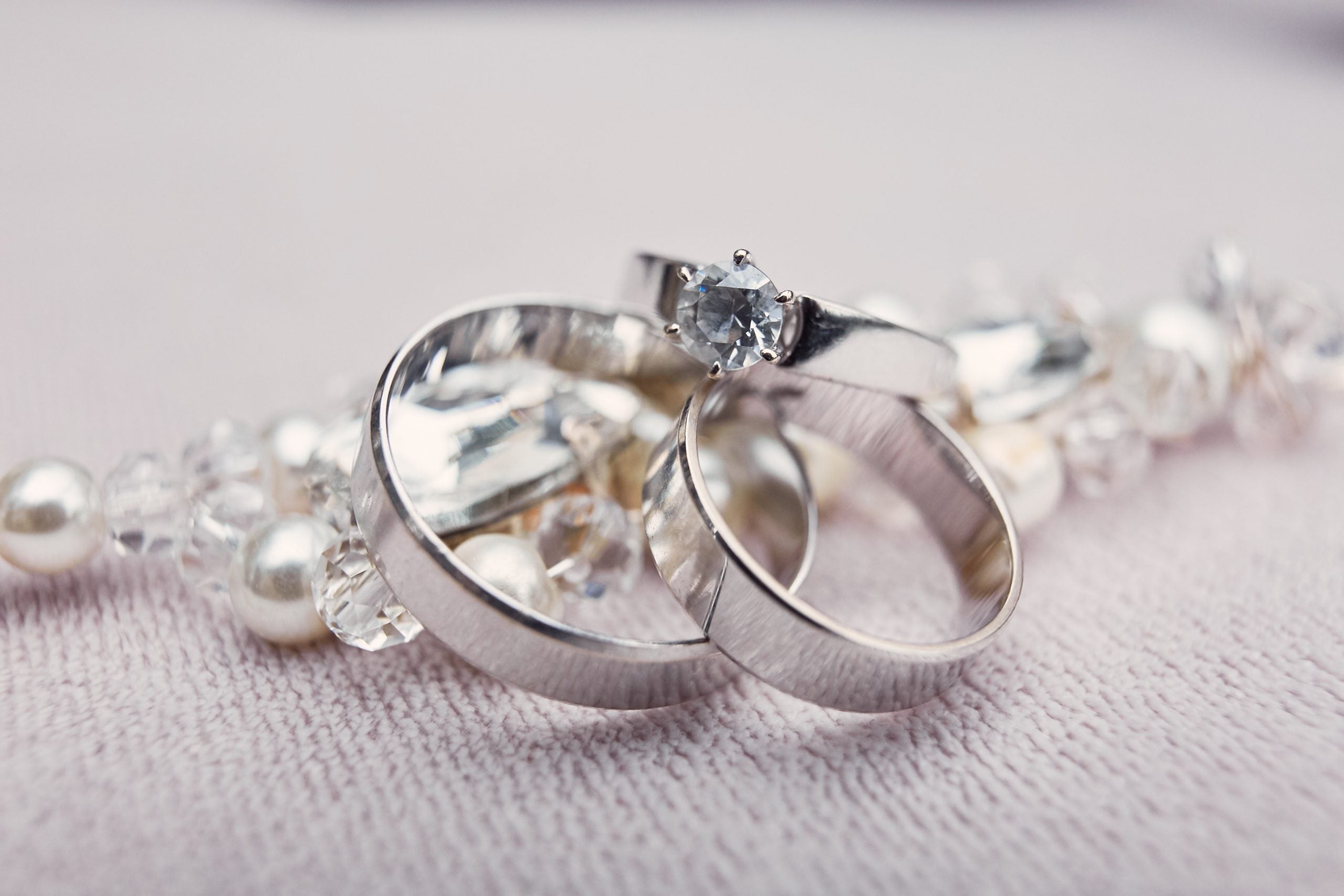
- Pearl accents. Once considered unconventional for engagement rings, pearls paired with diamonds are showing up more often for brides wanting something outside the traditional diamond-only look.
Lab-Grown vs. Natural: The Trend That Actually Affects Resale
The most consequential shift in the last decade is not a shape or a setting, it is the rapid growth of lab-grown diamonds as a center-stone option. Lab-grown stones are chemically identical to natural diamonds and cost significantly less at retail, which has made larger center stones more accessible. The trade-off worth knowing before you buy: natural diamonds have historically held resale value better than lab-grown stones, largely because lab-grown supply has expanded so quickly. Neither choice is wrong, but it is worth choosing with resale in mind if that matters to you down the road.
What Actually Holds Up Over Time
Trends shift every few years, but three things reliably hold their value at resale: a well-cut, certified center stone; a recognizable designer setting from a house like Tiffany & Co. or Cartier; and honest documentation of the metal and stone from day one. If you are shopping for a new ring, our engagement ring collection is a good place to see these trends in person. If you already own a ring and want to know what it is worth today, our certified gemologists can evaluate it at any of our four Texas locations.
Frequently Asked Questions
What are the 5 C's of a diamond?
Color, cut, clarity, carat weight, and certification. Understanding these five factors is the fastest way to compare diamonds and make an informed decision, whether you are buying or having a stone appraised.
Is $20,000 a lot to spend on an engagement ring?
Yes, that falls in the mid-to-high range for engagement ring budgets and is enough to get a well-cut, larger center stone with strong documentation, without needing to sacrifice on quality.
What is the most popular diamond shape overall?
Round still holds the top spot. According to the GIA, more than 60% of couples choose a round diamond as their center stone, a preference that has held steady since the shape was developed in the 1800s.
Is a vintage engagement ring a good idea?
It can be. Vintage rings offer distinctive craftsmanship and character that new rings often don't, though the cut quality may not match today's most precise modern cutting standards. Many buyers find that trade-off well worth it.
Have a ring you're thinking about selling or redesigning? Learn more about our buy-back program or schedule a free evaluation at any of our Texas locations today.

Written by Jonatan Yakubov