Natural Diamond vs. Lab-Grown Diamonds
Reviewed by Jonatan Yakubov, Graduate Gemologist at DJP Jewelers & Luxury Buyers.
Natural Diamond vs. Lab-Grown Diamonds
Chemically, the two are nearly indistinguishable. Financially, they behave nothing alike. If you own a diamond and are not sure which type it is, or you are wondering why an appraisal for a lab-grown stone came in lower than expected, here is what actually separates the two.
Where Diamonds Actually Come From
Natural diamonds form 90 to 120 miles below the earth's surface, under intense heat and pressure, over a period of one to three billion years. They reach the surface through violent volcanic eruptions that create structures called kimberlite pipes. Lab-grown diamonds, by contrast, are produced in weeks using one of two methods — HPHT (high pressure, high temperature) or CVD (chemical vapor deposition) — technologies originally developed in the 1950s for industrial cutting tools. Gem-quality lab-grown diamonds only became commercially viable in the 2010s.
Chemically Identical, Economically Different
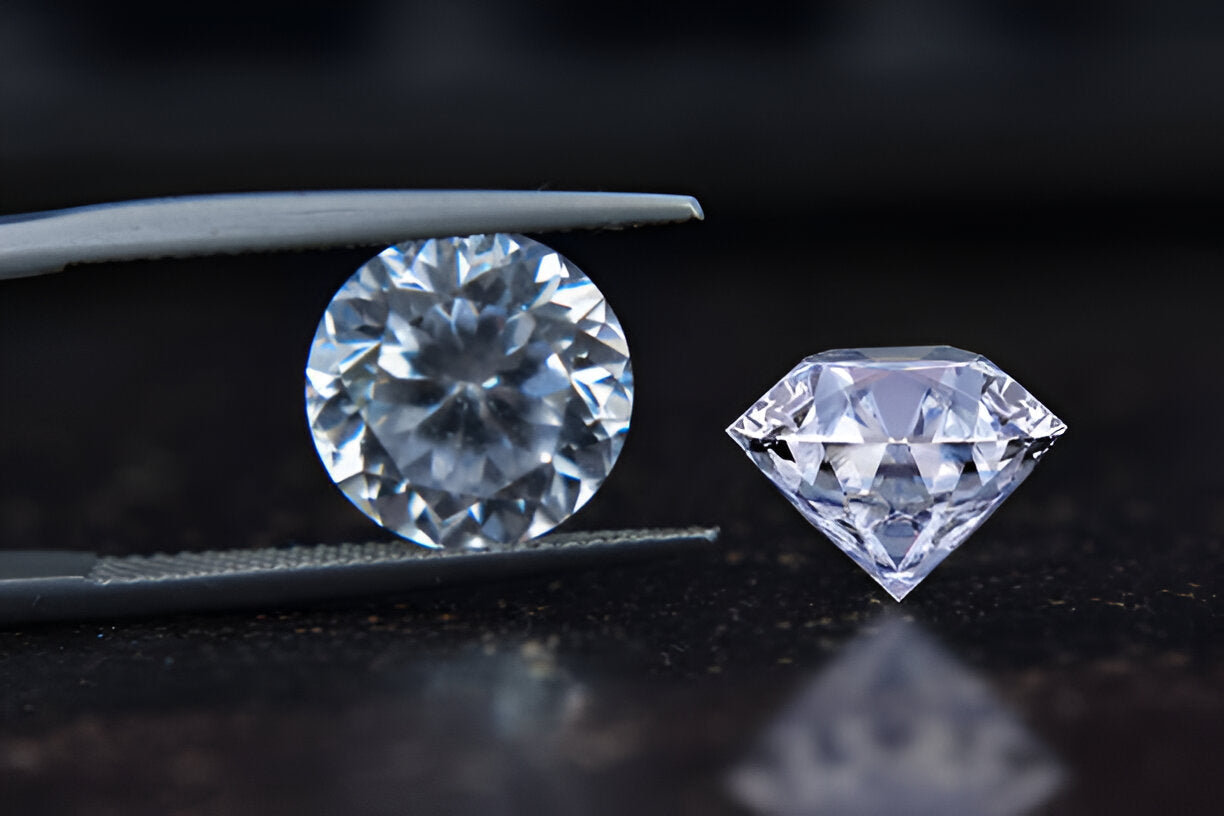
- Physical properties. Lab-grown diamonds have the same hardness, brilliance, and fire as natural diamonds because they are made of the same crystallized carbon. Neither the eye nor most standard tests can tell them apart without specialized equipment.
- Certification. Both GIA and IGI certify lab-grown diamonds, but reputable labs are required to clearly mark the certificate and often laser-inscribe the girdle to disclose its origin.
- Price at purchase. Lab-grown diamonds typically sell for 60 to 80 percent less than natural diamonds of comparable size and quality.
- Resale value. Natural diamonds retain value meaningfully better on the secondary market. Lab-grown diamond prices have fallen sharply and consistently since large-scale production began around 2016.
Why the Resale Gap Keeps Growing
Natural diamonds are finite. Every stone above ground was formed over a billion years ago, and mining output is limited and shrinking at older mines. Lab-grown diamonds face no such constraint. Production capacity keeps expanding, and each new facility pushes prices lower, which is why lab-grown resale values have continued dropping even as natural diamond prices have stayed comparatively stable.
Common Cuts You'll See in Both
Both natural and lab-grown diamonds are cut into the same popular shapes — round brilliant, oval, princess, emerald, radiant, pear, and cushion. The cut affects brilliance and price, but it doesn't change whether a stone is natural or lab-grown; only origin does that.
Get Your Diamond Evaluated
Whether you have a natural or lab-grown stone, our GIA-trained team can identify it and give you an accurate value. Visit our diamond buying page or bring your piece to any of our four Texas locations for a free evaluation.
Frequently Asked Questions
Are lab-grown diamonds real diamonds?
Yes. Lab-grown diamonds have the same chemical composition and crystal structure as natural diamonds — the only difference is where and how they formed.
Can a jeweler tell if a diamond is lab-created just by looking at it?
Usually not with the naked eye. A trained gemologist needs specialized equipment to detect the subtle growth-structure differences that reveal a stone's origin.
Do I have to disclose that a diamond is lab-grown when I sell it?
Yes. Reputable buyers will test for origin regardless, and disclosing it upfront, along with any certification, helps you get an accurate, fair offer faster.
Are lab-grown diamonds the same as moissanite?
No. Both are lab-created, but moissanite is made of silicon carbide while diamonds are pure carbon — they have different hardness, brilliance, and value.
Are lab-grown diamonds worth anything on resale?
Yes, but typically much less than their original purchase price, and less than a comparable natural diamond would retain. Metal content and any accompanying gemstones still add value beyond the lab-grown stone itself.
Ready to find out what your diamond is worth? Schedule a free evaluation at any of our four Texas showrooms.

Written by Jonatan Yakubov